
Rebuilding the Gulf Coast Florida means navigating FEMA’s 50% Rule, permits, zoning, and rising insurance while choosing construction that withstands hurricanes. From ICF and modular builds to smarter design, resilience is the only path to a safer future.
What Rebuilding the Gulf Coast Florida Really Demands in 2025
Florida’s Gulf Coast recovery is far more complex than replacing walls. Hurricane Ian highlighted strict FEMA rules, permitting delays, zoning hurdles, and rising insurance costs.
Success now depends on building smarter and more resilient, not just faster. Here’s what matters most:
- Timelines: Rebuilds often take 12–18 months or more.
- FEMA’s 50% Rule: Repairs over half the replacement value trigger full code upgrades.
- Permits & Setbacks: Local boards and zoning can delay projects for months.
- Costs: Insurance rarely covers everything, so plan 20–30% beyond payouts.
- Construction Options: ICF offers unmatched resilience, modular builds save time, wood is cheaper but riskier.
- Future-Proofing: Elevation, storm-rated roofs, and impact windows keep homes safer and insurable.
Rebuilding here is both a challenge and an opportunity.
With careful planning and resilient choices, families can create homes that thrive for generations.
Every decision shapes future security, from contractors to construction methods, making strength and safety the true focus.
Why the Gulf Coast Must Rebuild, And Why It Must Be Stronger Than Before
Rebuilding after Hurricane Ian is not just a task, it’s a responsibility.
For thousands across Southwest Florida, the storm didn’t just take structures, it shook the foundation of daily life, community rhythm, and future security.
What comes next must be stronger, smarter, and rooted in resilience.
1. Hurricane Ian Wasn’t Just a Storm, It Was a Turning Point
Hurricane Ian changed everything.
Entire neighborhoods were reduced to debris fields. Families were displaced, businesses shuttered, and familiar streets became unrecognizable.
The emotional toll is still unfolding for many. But amid the wreckage, one truth emerged clearly: rebuilding isn’t just about lumber and labor, it’s about restoring a sense of home, peace, and belonging.
2. Florida’s Coastline Isn’t Built for Basic Construction
Florida’s Gulf Coast isn’t like other regions. It demands a different kind of construction mindset. One storm isn’t the end of the story, it’s often just the beginning.
Between wind speeds that can rip roofs off in minutes and storm surge that invades foundations like a slow-moving flood, minimum building codes are not enough.
Flood zones are expanding.
Mold takes hold quickly in high-humidity environments. And the cost of insurance reflects these realities, with premiums rising year after year.
3. Some Land Was Never Meant to Hold Permanent Homes
The ground beneath many homes is shifting. Barrier islands such as Sanibel and Captiva, by their nature, are designed to move with storms and tides.
Rebuilding on them without long-term strategy risks repeating past mistakes.
Some coastal experts have even suggested that select high-risk zones be left to nature or converted to public use, raising hard questions about whether rebuilding in the same spot is always the best path forward.
4. It’s Time to Build With Tomorrow in Mind
Climate change adds further complexity. Rising sea levels and intensifying hurricanes make yesterday’s methods obsolete.
What may have passed inspection 10 years ago could now leave a home uninsurable or too dangerous to live in.
Rebuilding here means preparing to face not just the next hurricane season, but the next generation of challenges.
When you understand what makes the Gulf Coast unique, you begin to see that rebuilding here isn’t just construction, it’s adaptation.
The next step is understanding what this new rebuilding journey really looks like in 2025.
Helpful Resource → Florida Hurricane Building Codes Explained
What Rebuilding a Gulf Coast Home Really Involves in 2025
Rebuilding in Southwest Florida today is far more complex than it was just a few years ago.
After Hurricane Ian, many homeowners learned it’s not just about clearing debris, it’s about navigating permits, regulations, inspections, and long timelines.
1. Rebuilding a Home Isn’t a Quick Turnaround
Most Gulf Coast rebuilds take 12–18 months from planning to move-in.
- Permitting offices are often backlogged in storm-hit counties.
- Insurance claims and inspections create delays.
- Design decisions and change orders extend timelines.
With realistic expectations, the process feels less overwhelming and more manageable. Setting the right timeline early prevents disappointment down the road.
2. Understanding the 50% Rule Before You Begin
FEMA’s 50% Rule is a key hurdle for storm-damaged homes.
- Repairs over 50% of replacement value trigger code upgrades.
- Replacement value differs from market value.
- Older homes often face full demolition instead of repair.
- Private appraisals may improve your chances of rebuilding.
- Appeals are possible but require documentation.
- Many homeowners only learn this rule once they’re already deep in the process.
Learning the 50% Rule upfront helps you plan with clarity and confidence. Knowing your options early can save both time and money.
3. Zoning, Setbacks, and Permitting Can Stall Progress
Paperwork doesn’t end with insurance approvals.
- Setback restrictions can limit where you build.
- Elevation requirements add design challenges.
- Variance requests may take months to resolve.
Due diligence before you buy or rebuild avoids major headaches. A careful review ensures your lot truly supports your vision.
Helpful Resource → Can You Build a House on Agricultural Zoned Land in Florida?
4. You May Need to Build Higher Than You Think
Flood maps are stricter than ever before.
- Many homes must meet Base Flood Elevation (BFE).
- Elevation impacts layout, foundation, and utilities.
- Some insurers refuse coverage below new standards.
Building higher protects your family’s safety in future storms. It also preserves access to critical insurance coverage.
Helpful Resource → How Babcock Ranch Avoids Flooding in Hurricane-Prone FL
5. Budgeting for What Insurance Won’t Cover
Insurance rarely pays for everything.
- Design upgrades are usually out of pocket.
- Code-required improvements add cost.
- Inspection and remediation bills can pile up.
Setting aside 20–30% beyond insurance payouts is realistic. This cushion helps absorb the costs no one expects but nearly everyone faces.
Helpful Resource → Florida Hurricane Insurance: What’s Covered & What’s Not
6. Don’t Underestimate the Hidden Cost of Mold
Mold is nearly unavoidable after flooding.
- Moisture hides inside walls and ducts.
- Testing and remediation are essential.
- Cutting corners risks health and long-term repairs.
Treat mold as a required step, not an optional extra. Addressing it fully protects both your health and your home’s value.
The Gulf Coast rebuild process is demanding, but manageable when you prepare for each step. The next challenge is choosing a contractor who delivers on promises instead of creating new problems.
How to Spot a Scam Before It Hijacks Your Home Build
View this post on Instagram
After a major storm, the urgency to rebuild often attracts unqualified contractors.
Many make big promises but disappear or deliver unsafe work, leaving homeowners with costly, unfinished projects. Recognizing the warning signs is the best way to stay protected.
1. Red Flags That Signal a Scammer
Not every contractor knocking on doors after a storm has your best interests in mind. Some arrive with polished sales pitches but little substance behind them.
- No valid Florida contractor license.
- Vague or incomplete contracts with shifting terms.
- Demands for large payments upfront.
- Pressure to sign quickly without due diligence.
- No physical office or long-term local presence.
If a deal feels rushed or unclear, that’s usually a sign to walk away. Trust builds through transparency, not pressure.
2. The Cost of Choosing the Wrong Builder
Hiring the wrong person doesn’t just waste money, it can set your entire rebuild back by months or even years. Beyond the financial hit, it can also affect your home’s safety and future value.
- Projects left incomplete after deposits are taken.
- Shoddy workmanship leading to costly repairs later.
- Homes that fail inspection or don’t meet updated codes.
The financial loss is only part of the damage. Families also face stress, delays, and uncertainty when trust is broken.
3. What Reliable Builders Do Differently
Good contractors don’t just build houses, they build trust. They take responsibility, stand by their work, and make the process clearer instead of more complicated.
- Hold an active Florida state license and insurance.
- Provide detailed written contracts and timelines.
- Maintain a permanent office and verifiable references.
- Offer workmanship warranties and stand by their work.
Legitimate builders rely on reputation and community trust. They don’t disappear when challenges arise.
4. Practical Ways to Protect Yourself
Homeowners have more power than they realize when it comes to preventing scams. A few smart checks upfront can save months of frustration later.
- Verify licenses at MyFloridaLicense.com.
- Request proof of insurance before signing.
- Ask about permits and who is responsible for obtaining them.
- Always demand detailed, written estimates.
Taking these simple steps early keeps you in control. A careful vetting process is the best safeguard against regret.
Why Local Experience Matters
Builders who live and work in the community bring more than skill. They understand local codes, permitting offices, and storm-specific challenges.
Choosing a builder rooted in the region adds another layer of accountability. Local contractors have a stake in your community’s long-term recovery.
Once you’ve secured the right team, the next decision is equally important, choosing the type of construction that best protects your investment on the Gulf Coast.
Exploring Your Construction Options on the Gulf Coast
Choosing the right construction method can determine whether your home weathers the next storm or faces costly repairs.
Each approach has strengths and weaknesses, and understanding them is essential before committing to a rebuild.
1. ICF Homes Offer Long-Term Security
Insulated Concrete Form (ICF) construction is quickly becoming a gold standard for storm-prone areas. It combines strength, efficiency, and long-term resilience that fits Gulf Coast needs.
Pros:
- Withstands hurricane-force winds and floodwaters effectively
- Provides superior insulation and reduces energy costs
- Reduces outside noise and improves interior comfort
- Strong walls resist mold and moisture intrusion
- Long-term insurance stability likely with resilient structure
Cons:
- Higher upfront construction costs compared to wood
- Fewer contractors with specialized ICF expertise available
- Slower build process than modular alternatives
- Limited flexibility in last-minute design changes
- Heavy structure may need special foundation adjustments
ICF may cost more initially, but its durability and efficiency often save money over decades of ownership.
2. Modular Homes Save Time Without Sacrificing Strength
Modular homes are built in sections off-site and assembled quickly. They’re an efficient solution for homeowners who value speed but still want strength.
Pros:
- Faster completion compared to traditional site builds
- Built indoors, avoiding weather-related construction delays
- Factory quality control ensures consistent workmanship
- Designed to meet or exceed Florida building codes
- Lower overall labor costs compared to custom builds
Cons:
- Limited design customization compared to custom homes
- Transportation challenges for larger modular sections
- Financing options may be less flexible in some areas
- Resale value can vary depending on buyer perception
- Less common locally, so contractors may be fewer
Modular homes bring speed and reliability, giving families quicker paths back to safe living.
3. Wood Frame Remains Common but Riskier
Wood-frame construction is the most familiar and affordable option, but it comes with vulnerabilities that are magnified in storm-prone areas.
Pros:
- Lower initial costs compared to ICF or modular
- Widely available materials and construction expertise
- Easier to customize design and layout quickly
- Flexible for renovations or expansions over time
- Shorter build time than concrete-based alternatives
Cons:
- Highly vulnerable to hurricane winds and flooding
- Susceptible to mold, termites, and long-term decay
- Insurance premiums often rise faster for wood builds
- Repairs and maintenance add significant lifetime costs
- Less energy-efficient in Florida’s hot, humid climate
Wood may be affordable upfront, but the long-term risks often outweigh initial savings.
4. Making Smart Choices on Exteriors
The right finishes protect your investment and lower upkeep.
- Stucco provides a seamless, weather-resistant surface.
- Fiber cement resists rot, pests, and salt exposure.
- Vinyl siding is affordable but less durable in coastal conditions.
Selecting exterior finishes with storms in mind helps reduce maintenance and extend the life of your home.
5. Designing Roofs That Lower Risk and Cost
Roof design plays a major role in storm readiness. Hip roofs deflect wind more effectively, while tie-downs and strapping reinforce critical connections.
Proper sheathing prevents uplift during high winds, reducing the chance of catastrophic failure.
Investing in a stronger roof not only protects your family but may also lower insurance costs year after year.
Future-Proofing Coastal Homes
Building for the Gulf Coast isn’t just about today’s standards, it’s about anticipating tomorrow’s storms.
Elevating living spaces above flood levels, using breakaway walls, and installing impact-resistant windows are steps that go beyond compliance.
Strong construction choices give homeowners security, but resilience also opens doors for growth.
As rebuilding continues, the Gulf Coast is uncovering new opportunities that go beyond homes and extend into community and economic renewal.
Opportunities Emerging in Southwest Florida’s Rebuild
View this post on Instagram
Rebuilding along the Gulf Coast isn’t only about replacing what was lost, it’s also about recognizing the new opportunities created in the process.
Across Southwest Florida, especially in areas like Bonita Springs, prime spaces are opening up for fresh development that can strengthen both communities and the local economy.
- Waterfront Lots: Rare properties with direct open-water access offer unmatched long-term value.
- Mixed-Use Potential: Many parcels can support restaurants, vacation rentals, or condos, giving flexibility in design.
- Marina & Dock Access: Existing docks and fuel stations make certain sites especially attractive for boating and tourism.
- Tourism-Driven Growth: With steady demand, hospitality and rental projects remain strong anchors for rebuilding.
- Community Reinvestment: Each redevelopment not only restores property but also creates jobs and supports local recovery.
These opportunities highlight that rebuilding isn’t just about stronger homes, it’s about reimagining what the Gulf Coast can become, blending resilience with renewed growth.
How Tri-Town Construction Is Rebuilding the Gulf Coast the Right Way
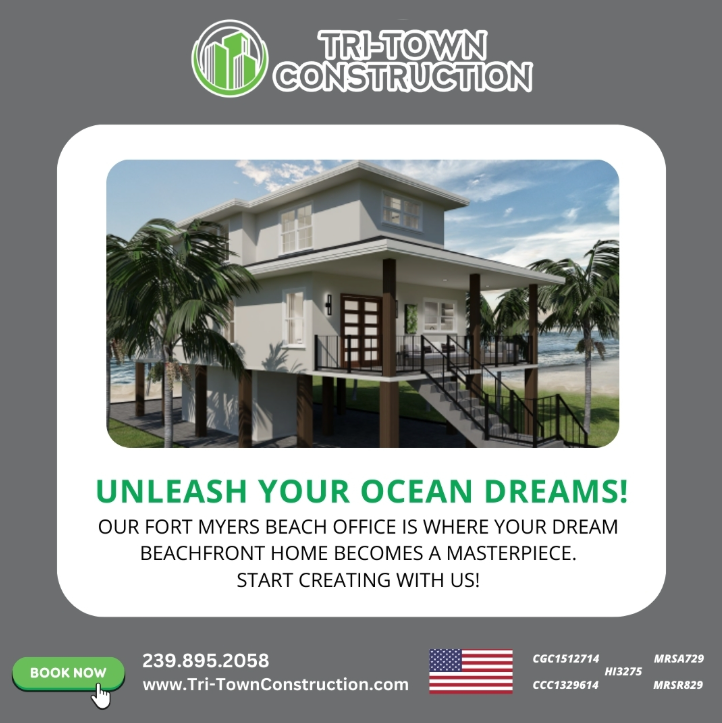
Tri-Town Construction was founded after seeing firsthand how contractors failed communities in the wake of major storms.
That experience shaped a commitment to do things differently, focusing not only on rebuilding homes but on restoring trust, stability, and resilience.
Every project begins with a community-first mindset, recognizing that recovery is just as emotional as it is structural.
By using a design-build approach, one dedicated team manages everything from planning to completion, reducing miscommunication and delays.
Tri-Town also holds specialized licenses in mold remediation, roofing, and structural work, making it uniquely equipped to address the hidden challenges of coastal rebuilding.
The mission is simple yet vital: create homes that stand strong against storms, keep insurance more manageable, and provide lasting comfort for families.
For Tri-Town, building above code isn’t optional, it’s a promise to ensure the Gulf Coast thrives for generations.
If you are preparing to rebuild in Southwest Florida, Tri-Town is ready to help you do it the right way.
👉 Download our free step-by-step guide to rebuilding smarter