How Babcock Ranch Avoids Flooding in Hurricane-Prone FL

Babcock Ranch avoids flooding through a system of elevated design, smart stormwater lakes, preserved wetlands, and layered drainage that works with natural terrain, not against it. How Babcock Ranch Avoids Flooding: Key Takeaways Up Front Babcock Ranch was purpose-built to handle Florida’s toughest storms.  Located 20 miles inland on high ground, it uses smart design and natural systems to manage water before, during, and after hurricanes. Here’s how it works: Strategic Elevation: Homes, roads, and buildings are tiered by height to direct water away from living areas. “Bowl” Lakes & Pipes: Artificial lakes sit lower than homes and are connected by underground pipes that shift overflow. Manual Storm Prep: Lakes can be drained ahead of storms to add storage space for heavy rain. Wetlands Over Pumps: Water drains into protected wetlands, not just pipes, slowing runoff and reducing pressure on infrastructure. Redundant Flow Paths: If one area floods, water is rerouted automatically through connected systems. Power + Internet Stays On: With solar energy and buried lines, utilities remain stable during storms. These aren’t just one-off features.  They’re part of a unified system that’s kept homes dry while others around them flooded. And if you’re wondering whether this approach can work
How Long Does It Take to Build a Modular Home in Florida?

Modular homes in Florida typically take 4 to 6, even 8 months from start to finish, including design, factory construction, site prep, and final inspections. How Long Does It Take to Build a Modular Home? Here’s the Full Breakdown Modular homes are faster than traditional builds, but not overnight miracles.  The total timeline includes five main stages, from floor plan selection to final utility hookups, and each plays a role in how quickly you’ll move in. Here’s what to expect: Design & permitting: 1–3 months depending on customizations and county Factory build: 6–16 weeks in climate-controlled conditions Site work & foundation: 1–2 months, can overlap with factory build Delivery & crane setup: 1–2 weeks, weather-dependent Final finishing & inspections: 1–8 weeks, often utility-limited With the right planning, modular construction can cut months off your build time and avoid common delays.  Site factors like flood zones and utility access still matter, but with a clear roadmap, moving from factory to keys in under 8 months is entirely possible. The Full Timeline for a Modular Home Build Modular construction is known for moving faster than traditional building, but each phase still plays a crucial role in the overall timeline.  By understanding what

17 Hidden Costs of Buying a Mobile Home

Mobile home calculators often leave out land, delivery, permits, insurance, and setup costs, meaning buyers can end up paying 1.5 to 2 times more than the listed price. The Real Cost of a Mobile Home: What Calculators Miss Buying a mobile home may look affordable, but most calculators leave out key costs like land, delivery, setup, permits, utilities, rising lot rent, insurance, and regional code upgrades.  With chattel loans, expect higher interest and shorter terms, making the true price far higher than the sticker suggests. To avoid surprise expenses, make sure you: Ask if land and site prep are included Factor in setup, delivery, permits, insurance, and utilities Budget 10–20% for inspections and unexpected fees Choose communities carefully to avoid rising rents Work with local experts who know your zoning and climate risks Planning with real numbers, not brochure prices, can save you thousands and months of frustration. Because if you want a mobile home that doesn’t blow your budget, what you do before signing matters more than what you’re told during the sale. Keep reading, we’re going to break it all down. Why the Mobile Home Price You See Isn’t What You’ll Actually Pay The price you see on

Mobile Home vs Modular Home: What’s Best for Florida?

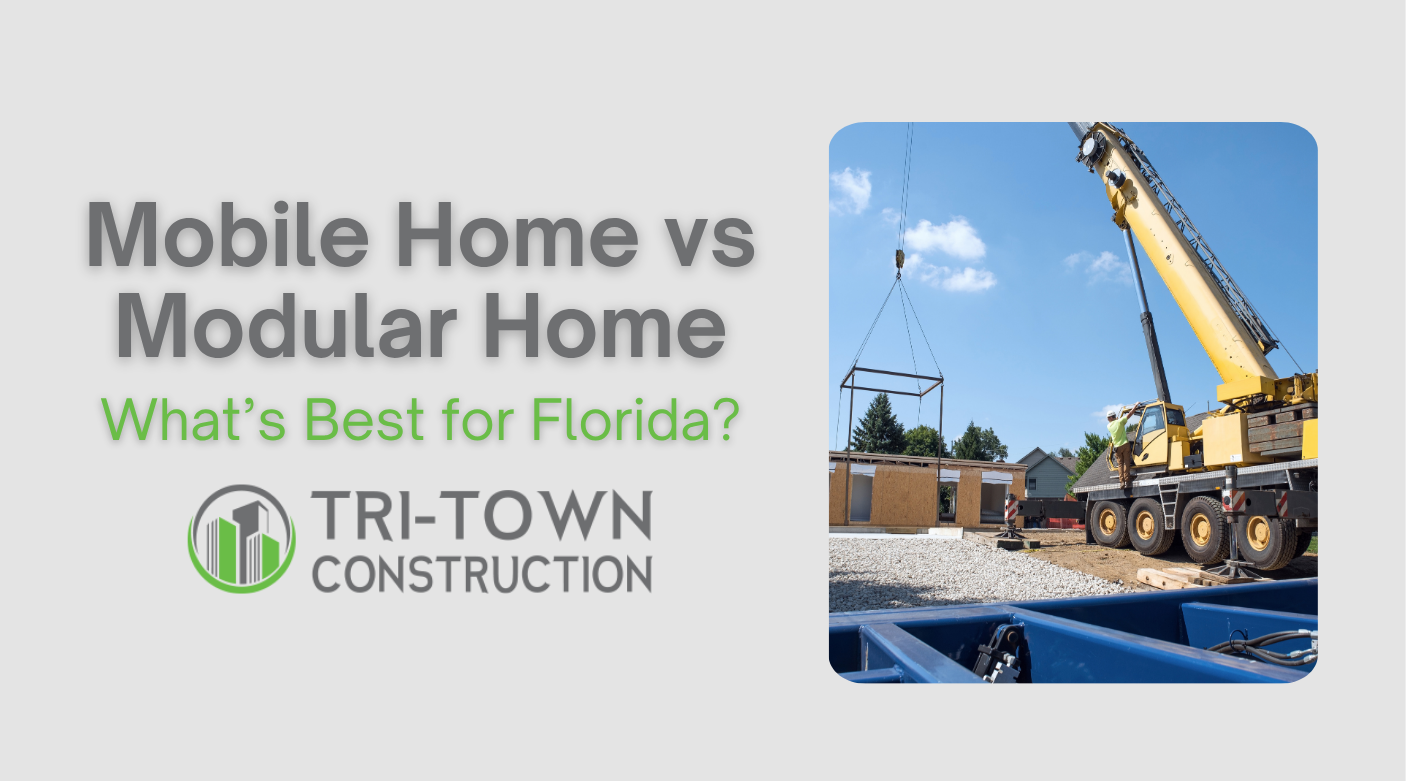
Mobile homes are transportable, HUD-regulated structures, while modular homes are built to local codes, permanently installed, and better suited for long-term value, financing, and storm resilience in Florida. Mobile vs Modular: What You Need to Know Up Front Both mobile and modular homes are built off-site, but that’s where the similarities end. In Florida, where zoning, weather, insurance, and resale all matter, modular homes generally offer more long-term benefits, while mobile homes provide a fast, low-cost housing solution. Here’s what matters most: Modular homes are built to local IRC codes and installed on permanent foundations, making them easier to finance, insure, and approve with HOAs. Mobile homes are HUD-regulated, built on steel chassis, and often limited by zoning laws and depreciation. Modular homes resemble traditional homes, with more design flexibility and better storm performance. Mobile homes are quicker and cheaper to set up but harder to resell or insure, especially in flood zones. If you’re planning to build equity, weather the next storm, and stay long-term, modular is the smarter investment. There’s a lot more to unpack, including side-by-side comparisons, buyer concerns, and real-world pros and cons, so keep reading to see which choice fits your goals best. Mobile Homes

Florida’s 50% Rule Explained: What Homeowners Need to Know

If repairs or improvements to a home in a FEMA flood zone exceed 50% of the structure’s value, the entire building must meet current flood and building codes, often requiring elevation or full-code upgrades. Florida’s 50% Rule: What Homeowners Must Know Up Front The 50% Rule is one of the most misunderstood parts of Florida’s building regulations, and it can stop your remodel or rebuild before it even begins. Here’s what you need to know in plain language: It applies when repairs or renovations exceed 50% of your home’s structure-only value (not including land). Once triggered, you must bring the entire structure up to today’s codes, including FEMA flood standards. It’s enforced in flood-prone zones (AE, VE) and handled by your local building department. Even improvements, not just damage, can activate it, kitchen remodels, additions, or major system upgrades all count. All costs count toward the 50%: labor, permits, materials, even owner-supplied work. If triggered, expect new permits, possible elevation, and often higher-than-expected costs. This rule affects what you can build, when you can build, and how much it costs, often catching homeowners off guard.  Older homes may not meet requirements affordably, making early planning and clear cost awareness critical.

Cost to Build a Beach House in Florida (2025 Guide)

A beach house in Florida costs between $150 and $280 per square foot, depending on design, materials, and location. Total budgets range from $350K for modular builds to $1M+ for high-end custom homes with hurricane upgrades and coastal features. Florida Beach Home Costs: What to Know Before You Build Building a beach house in Florida feels like the ultimate goal, until the real costs start stacking up. From land and materials to flood zones and permits, expenses can climb quickly.  Here’s what to keep in mind before starting your build. Build cost range: $150–$280 per sq ft Total budget: $350K (modular) to $1M+ (custom) Land cost: $100K–$1M depending on location Foundation & flood protection: $10K–$30K+ in VE zones Insurance: $3,600+/year, flood insurance extra Extras: Pools, docks, energy upgrades, seawalls add $20K–$100K+ Ongoing costs: HOA fees, maintenance, storm prep Biggest risks: Budget creep, permitting delays, and zoning surprises Smart planning, like choosing efficient layouts, storm-ready materials, and builders who know the coast, can save you thousands and help avoid delays or do-overs. If you want your beach build to stay on budget and stand up to storms, the details matter.  From hidden costs to storm code must-haves, we break down everything