
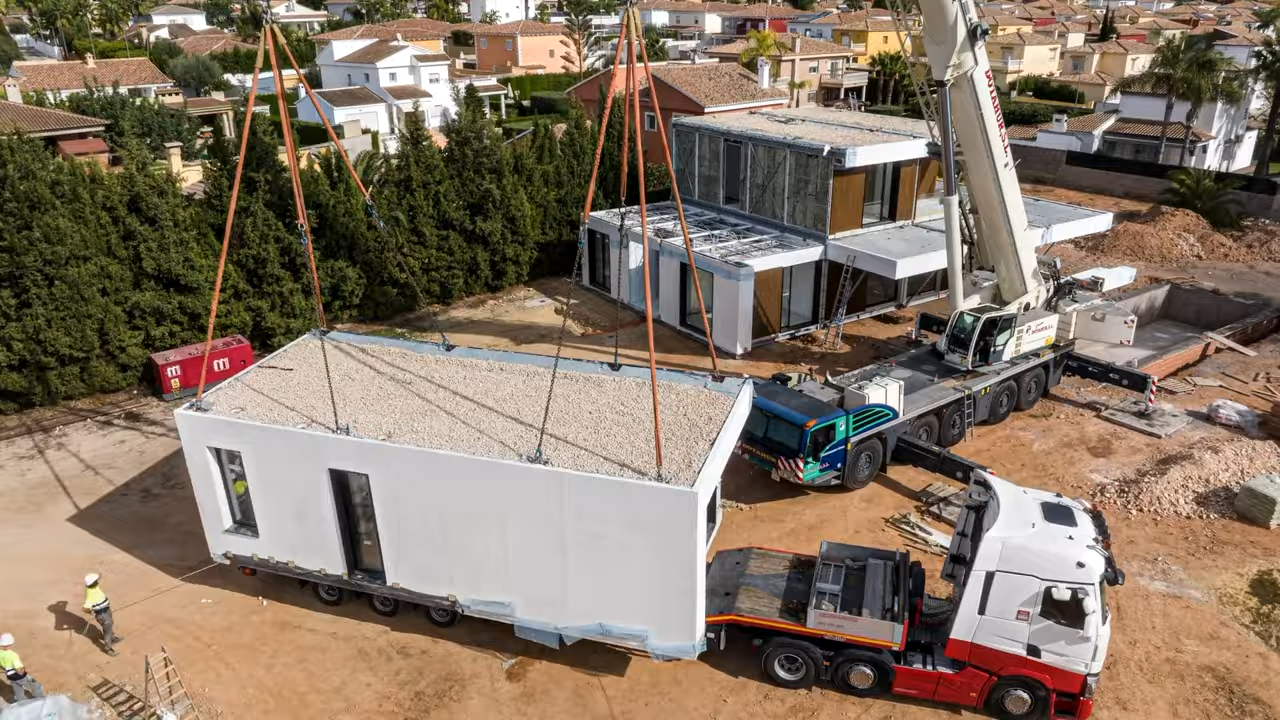
Prefab homes are gaining serious traction as a quicker, more affordable alternative to traditional construction. The idea of a factory-built structure with a low base price is highly appealing.
But here’s the catch: that low base price is rarely the full story.
While the factory-built structure may start at $90,000 or less, the actual final cost to make it livable can easily double once you account for land, permits, site prep, utility hookups, foundation work, and required upgrades. Many buyers don’t realize this until they’re deep into the process. Hence, we made this guide.
This guide will help you understand the true cost of prefab homeownership and five common hidden costs to be careful about. Because buying a prefab home shouldn’t feel like a guessing game; it should feel like a smart investment in building prefab.
Defining Prefab: Modular Home vs. Manufactured Home
Before diving into the costs, it’s vital to understand the different types of prefabricated homes, as their classifications heavily impact financing, codes, and long-term value.
What Counts as a Prefab Home?
A prefab home is simply a structure built in a factory and transported to the site, but not all prefab homes are the same.
| Type | Built To Code | Foundation | Financing Access | Property Type |
| Modular Home | Local Building Code for modern prefab structures. | Permanent | Traditional mortgage | Real Property |
| Manufactured Home | HUD Code | Temp or Perm | Limited or higher rates | Maybe Personal/Real |
| Stick-Built | Local Building Code | Permanent | Traditional mortgage | Real Property |
Modular Home: The Gold Standard Prefab
Modular homes are built in sections and assembled on the homeowner’s property on a permanent foundation, making them a popular choice among prefab manufacturers. Crucially, they meet local building codes and qualify for traditional mortgages, similar to standard homes. They can appreciate in value and are classified as real property once installed. However, they do not include land, site prep, or utility hookups in the base price.
Manufactured Home: Cheaper Upfront, Tighter Restrictions
Also factory-built but governed by HUD standards, manufactured homes often sit on a temporary or permanent chassis. They’re cheaper upfront but face tighter zoning, tougher financing, and may be considered personal property unless permanently installed.
Stick-Built Homes: The Traditional Home Construction
Stick-built homes are constructed entirely on-site. These homes meet local codes and offer full design freedom. They are the most expensive option but come with fewer limitations in terms of insurance, financing, and long-term resale value.
Sticker Shock: Why the Cost of Prefab Doesn’t Start with the Base Price
“I was shocked thinking a $90K quote included everything, it didn’t.” It’s a common phrase we hear from people looking to buy a prefab home.
What the Base Price Typically Covers
That’s because prefab homes often advertise base prices that sound too good to pass up, like $90,000 for a complete structure. But that figure only covers what’s built in the factory. In most cases, it includes:
- The shell (walls, roof, floors) of prefab homes includes essential components for structural integrity.
- Basic insulation and framing
- Interior partitions
- Limited standard finishes
- Delivery (sometimes)
What the Base Price Does NOT Include
What it doesn’t include is everything that turns that structure into a livable home:
- Land: You’ll need to purchase or already own a lot before you can begin building a prefab house. In some areas, land alone can cost as much as the prefab home.
- Site prep: Clearing, grading, and leveling the land can cost $10,000 to $50,000+, depending on the terrain.
- Utility hookups: Connecting to water, sewer, electricity, gas, and internet, especially in rural locations, adds a high cost.
- Permits and inspections: Required by every municipality, with fees ranging from $1,000 to $5,000 or more.
- Foundation: Slab, crawl space, or basement, all come at additional cost, depending on site conditions and code requirements.
- Assembly and labor: A crew must be hired to place and finish the modules. That’s rarely included in the base price.
By the time you add it all up, that $90K prefab house could easily become a $180K investment, even before optional upgrades like landscaping, a driveway, or a garage in a home package.
5 Hidden Costs of Prefab Homes
Prefab homes are often marketed with a base price that appears affordable, but that figure typically excludes several essential expenses related to prefab components. Here are five major cost areas of prefab homes that are rarely included in upfront quotes and can significantly increase the total price of a home package.
1. Land and Site Development
The purchase price of a prefab home does not include the land it will sit on. Beyond the cost of the lot itself, preparing the land can cost anywhere from $10,000 to $100,000+, depending on location and conditions.
Key cost factors include the assembly of modern prefab units.
- Zoning restrictions may limit modular home or manufactured home types.
- Soil tests are needed to confirm load capacity and septic suitability.
- Grading and access work includes removing trees, leveling terrain, and potentially creating a driveway for delivery trucks and cranes.
2. Utility Hookups and Service Drop
Connecting a prefab home to essential utility services adds high cost and varies based on site conditions.
Estimated cost ranges:
- Well vs. city water: Municipal connections cost $1,500–$5,000; well drilling and pump systems range from $7,000–$20,000.
- Distance from utility lines: Trenching and conduit run $30–$100 per foot, with total costs between $5,000–$15,000+ for long distances when building prefab.
- Telecom and internet: Installing new service lines can cost $1,500–$5,000 or more, depending on the provider and proximity.
3. Permits, Fees, and Inspections
Permitting is required in every jurisdiction and includes a range of approvals that come with both fees and delays. Common costs include building a prefab home.
- Multiple permits and inspections across trades, including structural, electrical, septic, and mechanical.
- Delays in permitting may result in housing extensions, loan interest, or scheduling setbacks, complicating the process of building a prefab house.
- Fees are based on home value, size, or complexity.
The estimated cost range for prefab homes may vary: $1,000–$5,000+.
4. Foundation Work
Prefab homes require a proper foundation, and this is rarely included in the base price of prefab packages. The specific requirements for different types of prefab homes depend on the site and the type of prefabricated home.
Estimated cost ranges by type:
- Slab foundation: $6,000–$15,000
- Crawl space: $8,000–$20,000
- Basement: $20,000–$50,000+, an additional cost that must be factored into the overall cost of a prefab home.
Additional costs may include drainage correction, stem walls, and elevation adjustments, depending on site conditions and local code.
5. Assembly and On-Site Labor
While the structure is built in a factory, on-site assembly must be completed by local contractors, and these costs are not part of the base price. This often requires specialized equipment and expertise.
Key labor costs include:
- Cranes and rigging for transporting manufactured and kit homes can cost $2,000–$10,000 per day.
- Labor for finishing work and module integration: $10,000–$60,000+, depending on complexity and region
- Project management or contractor coordination, especially if not included by the prefab company
Estimated cost range: $15,000–$70,000+
Extra Costs That Add Up Fast
Even after your prefab home is delivered and assembled, a final wave of costs often hits during finishing and ownership. These are the expenses that rarely make it into the base price, but almost always show up in your final budget.
Exterior Add-Ons and Landscaping
Most prefab homes don’t include the essentials that make your property move-in ready, like landscaping, driveways, porches, stairs, or a garage. These features are necessary for function, safety, and curb appeal, but they typically fall on the homeowner to complete.
Estimated additional cost: $15,000–$60,000+
Interior Customization and Upgrades
Standard prefab finishes are basic and utilitarian. If you want quartz countertops, hardwood floors, premium fixtures, or customization on floor plan layouts, expect to upgrade at your own expense. This flexibility is what makes a modular home a customizable choice.
Estimated additional cost: $10,000–$40,000+
Code & Weather Compliance
Homes in coastal and high-risk areas often require mandatory structural reinforcements to meet local codes and qualify for insurance. These include hurricane straps, flood-zone elevation, impact windows, and fire-resistant materials. The ability of the prefabricated structure to be built to withstand these conditions is a major factor in the final cost.
Estimated additional cost: $10,000–$40,000+
Ongoing Ownership Costs
Once you move in, recurring costs like insurance, taxes, and HOA fees begin, which are important to consider when planning your dream prefab home. These vary by region and home classification but can have a lasting impact on your monthly budget.
Estimated annual cost: $3,000–$8,000+
Combined, these finishing and recurring expenses can easily add $40,000–$100,000 or more to your overall prefab home investment, making it essential to understand the full scope of your prefab packages. Accounting for them early can help you stay financially grounded from groundbreaking to move-in day.
How to Avoid Budget Blowouts: Tips for Buying a Prefab Home

Even well-organized prefab builds can go sideways when small, overlooked costs start stacking up, highlighting the benefits of prefab homes in terms of budget predictability. The good news about site-built homes? Most surprises in home building can be avoided with a little foresight, especially when working with prefab components.
Budget Beyond the Sticker Price
That base price might look like a steal, but it rarely includes land, prep, hookups, permits, or finishing. Experts advise clients to add 30–40% to the number they first see. If you’re eyeing a $150K prefab, think closer to $200K. That cushion protects you from cost creep when a permit takes longer, a storm slows work, or you decide to upgrade.
Get Real Quotes Early in the Building Process
Before you finalize anything, get real numbers from local pros: excavators, electricians, foundation crews, even crane operators. Too many homeowners wait until delivery day to realize they’ve underestimated the cost of trenching or concrete. Early estimates = better budgeting and fewer shocks later.
Know What Your Warranty Actually Covers
Warranties sound reassuring until you realize they don’t cover site-built features like decks or garages, or work done by unapproved contractors. Ask for a list of what’s excluded. Don’t assume that just because something’s part of your home, it’s covered.
Plan for Delays (They Are Coming)
Permits get held up, which can delay the delivery of your manufactured and kit homes. Inspections fail. Summer storms flood job sites. Build margin into your construction process schedule to ensure the timely delivery of prefab components. Give yourself buffer weeks. Move-in dates and furniture deliveries shouldn’t happen the day after final inspection, trust us on that one.
The Bottom Line: Should You Still Go Prefab?
Absolutely, if you’re ready for the full picture. Prefab homes can be a fantastic way to build faster, smarter, and sometimes more affordably, but only if you understand what’s included and what isn’t.
You’ll need to think through permits, site development, utility coordination, and costs that don’t show up in the brochure. If you treat the base price as the total price for your manufactured and kit homes, you’re setting yourself up for surprises. But if you go in with a clear plan, accurate quotes, and room for the unexpected, prefab can be a smooth and rewarding experience.
View this post on Instagram
FAQs
Q: Are prefab homes cheaper than traditional home construction?
A: The factory construction of a prefab home is often less expensive than traditional home construction, but when you account for land, site prep, foundation, utility hookups, permits, and on-site labor, the final cost is often similar to or just slightly below a stick-built home. The real pros of prefab homes are speed and consistency in the building process.
Q: What is the primary difference between a modular home and a manufactured home?
A: A modular home is built to meet local building codes and is typically placed on a permanent foundation, qualifying it as real property and for traditional mortgage financing. A manufactured home is built to HUD code (a federal standard), is often placed on a non-permanent chassis, and may be classified as personal property, leading to tougher financing options.
Q: What is the estimated cost range for land and site development for a prefab house?
A: The cost of land is separate, but the site prep and development, including grading, utility trenching, and soil tests, can range widely from $10,000 to over $100,000, depending heavily on the terrain and the distance required to connect to utility lines.
Q: What major hidden costs are related to customization of a prefab home?
A: The base price covers standard, basic finishes. If a buyer wants customization such as quartz countertops, hardwood floors, premium fixtures, or changes to the basic floor plan, they should budget an extra $10,000 to $40,000+ for these interior upgrades, which can quickly drive up the cost of prefab.
Q: How much should I budget above the advertised base price to buy a prefab home?
A: Experts recommend budgeting an additional 30% to 40% above the factory base price to cover all on-site costs, including permits, foundation, utility hookups, and professional assembly labor. This cushion helps mitigate the impact of unforeseen delays and hidden expenses.
Deeper Dive: Pros and Cons of Prefab Construction
While the unexpected costs can be surprising, it is important to remember the core benefits that draw buyers to prefabricated homes in the first place. The factory setting offers advantages that traditional home construction cannot easily replicate, especially regarding the building process and energy efficiency.
Pros of Prefab Homes
- Speed and Timeline Predictability: Since the main structure is built in a factory, weather conditions and contractor scheduling delays have less impact. This often allows a prefab home to be move-in ready in a few months, compared to six months or more for a stick-built home.
- Cost Control and Transparency: The factory price of a prefab home is generally fixed, meaning less chance for material cost overruns during the primary construction phase. This makes the factory component of the building process more predictable.
- Energy Efficiency and Quality Control: Factory environments allow for precise cuts and tighter seals, resulting in better insulation and energy efficiency. Many prefab homes are designed to exceed minimum energy standards, which translates to lower utility bills over the long term for the homeowner.
- Less Waste: The controlled setting of prefab construction allows for the efficient use of materials and minimizes construction waste compared to on-site building.
Cons of Prefab Homes (Beyond Cost)
- Design Limitations: While customization is possible with modular homes, especially prefab homes, they generally offer less design freedom than starting a dream home from scratch with an architect. Customization can also quickly drive up the cost.
- Financing Challenges: While modular homes qualify for traditional mortgages, manufactured homes or kit homes may require specialized loans or higher down payments, complicating the home purchase. The appraisal process can also be more complex for a prefabricated home.
- Land and Zoning: Not all lots are zoned for every type of home. Buyers must confirm that their specific lot allows for a modular home or manufactured home, as zoning restrictions can present a major hurdle.
Financing Your Prefab: Construction Loan vs. Traditional Mortgage
Understanding the money required is crucial to buying a prefab home. The financing for a new build differs significantly from buying an existing property, particularly when you choose to purchase a prefab.
Modular Homes and Traditional Mortgage Access
Because they are built to local building codes and placed on a permanent foundation, modular homes are generally treated like traditional home construction by lenders. Buyers can often secure a construction loan to cover the total project cost (land, site prep, factory price, on-site labor), which then converts into a traditional mortgage upon completion.
The Manufactured Home Financing Hurdle
Manufactured homes often face a more difficult path. If they are not permanently installed on owned land, they may be classified as personal property (like an RV or mobile home), requiring a chattel loan, which typically has shorter terms and higher interest rates than a traditional home mortgage. Even if permanently attached, securing an equivalent traditional mortgage can be challenging.
The Upfront Cost Trap
Unlike buying an existing home, where the buyer only needs a down payment, building a prefab often requires the homeowner to pay the manufacturer in installments tied to the building process (e.g., upon contract signing, before factory production, upon delivery). This front-loaded payment schedule makes having a clear budget and access to a good construction loan absolutely essential.
Navigating Utility Hookups and Site Development
The expenses for site work and utility connections represent one of the highest and most volatile hidden costs of owning a dream prefab home. The price can vary drastically based on a single factor: distance.
Electricity and Water Infrastructure
Connecting a prefab house to existing municipal services (water, sewer, electricity) requires trenching from the street to the home. In urban settings, this may be a short, relatively inexpensive run for transporting manufactured and kit homes. In rural areas, a long run of trenching and conduit at $30 to $100 per foot can quickly become a five-figure expense when building prefab homes.
- Private Services: If municipal services are unavailable, the buyer must budget for private infrastructure to support their home building, especially when considering the cost of a prefab home.
- Well Drilling: $7,000–$20,000
- Septic System: $7,000–$15,000+, which is an important consideration when building a prefab house.
- The Electric Meter: Running the main electric service line to the home and installing the meter base is an essential, separate cost that must be coordinated with the local utility provider when your prefab home is transported to the home site.
Zoning and Soil Tests
Before any trenching can begin, the homeowner must have the site approved.
- Soil Tests: These tests confirm that the ground can support the weight of the prefab structure and that the soil is suitable for a septic system (if needed). Failure to conduct proper tests can lead to costly foundation failures.
- Site Grading: Leveling the land and ensuring proper drainage around the foundation is critical for the long-term structural integrity of the prefabricated home and is often a prerequisite for obtaining final permits.
Key Takeaways for Buying a Prefab Home
- The 30-40% Rule: Always add 30–40% to the advertised factory price to create a realistic budget that accounts for land, permits, foundation work, utility hookups, and on-site finishing.
- Modular is Not Manufactured: Understand the distinction. Modular homes are built to local building codes, are classified as real property, and are easier to finance with a traditional mortgage. Manufactured homes follow the HUD code and may be considered personal property.
- Get Quotes Early: Do not rely on estimates for site work. Get firm, itemized quotes from local contractors for the foundation, site prep, and utility hookups before finalizing your prefab home purchase contract with prefab manufacturers.
- Energy Efficiency is a Long-Term Pro: While initial cost is high, the tight, factory-built nature of prefab construction typically offers superior energy efficiency and lower long-term utility bills.
- Plan for Delays: The factory part is fast, but the on-site portion of site-built homes is susceptible to weather conditions, inspection delays, and permit backlogs. Build a time buffer into your schedule.
Ready to find a customizable prefab solution that fits your budget? Contact a local licensed contractor experienced in modular home installation for a comprehensive quote.
